Do I really need to densify the concrete twice? First & Foremost ”“ Consult the…

Substrate Technology
CONSTRUCTION EQUIPMENT & SUPPLIES
1384 Bungalow Rd.
Morris, Illinois, U.S.A.
If you’re deciding what to do with a concrete floor, two options come up again and again: polished concrete and epoxy coatings. Both turn a plain slab into a durable, attractive, easy-to-clean floor — but they’re different products that suit different spaces. Here’s how to think through polished concrete vs. epoxy so you choose the right one.
What Is Polished Concrete?
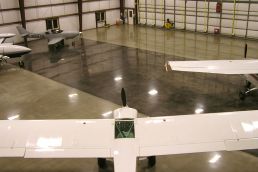
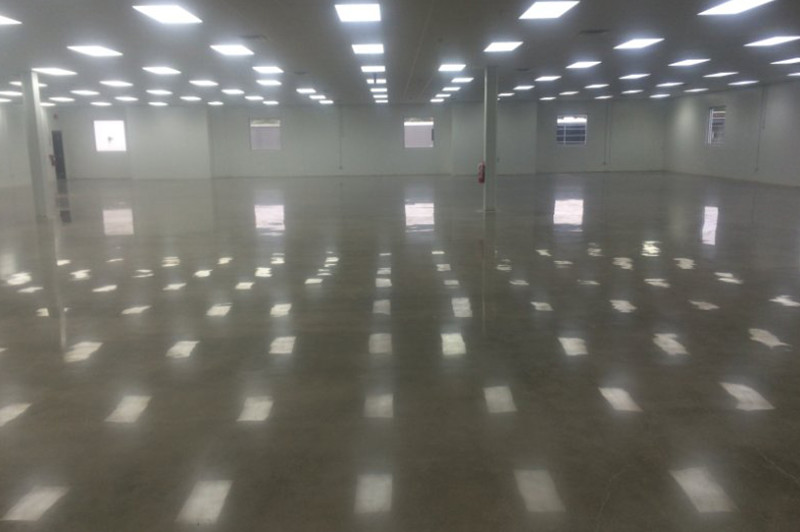
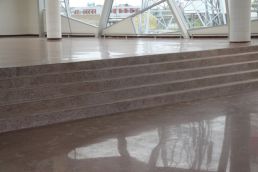
Polished concrete is your existing slab, mechanically ground and polished with progressively finer diamond tooling until it shines. There’s no coating on top — the finish is the concrete, hardened with a densifier and refined to the gloss level you want. It can be left a natural gray or given decorative color.
What Is an Epoxy Floor?
An epoxy floor is a coating applied on top of the concrete — a liquid resin that cures into a hard, seamless surface. It can be a solid color, include decorative chips or flakes, and is often finished with a protective urethane topcoat.
How They Compare
Durability. Both are tough. Polished concrete won’t chip, peel, or delaminate because there’s no coating to fail — it’s the slab itself. Epoxy is highly resistant to chemicals and impact, but because it’s a coating, it can eventually chip or peel if the prep was poor or it takes heavy abuse.
Appearance. Epoxy offers bold, uniform color and effects like metallic or flake finishes — great when you want a specific look. Polished concrete has a natural, high-end stone-like depth, and with decorative stains can deliver vibrant color too.
Maintenance. Both are easy to clean. Polished concrete is especially low-maintenance — routine cleaning and the occasional re-polish keep it looking new for years, with no coating to recoat. Epoxy is simple to clean but may need recoating down the road.
Chemical & stain resistance. Epoxy has the edge here — it’s a popular choice for garages, shops, and industrial spaces that see oil, chemicals, and spills. Polished concrete is stain-resistant when sealed, but isn’t as impervious as a dedicated epoxy.
Cost & downtime. Polished concrete often wins on long-term value — there’s no coating to replace, and a properly maintained floor lasts decades. Epoxy can be more affordable up front but factors in cure time (the floor is out of service while it cures) and eventual recoating.
Which Should You Choose?
Polished concrete is often the better fit for: retail stores, showrooms, warehouses, offices, and anywhere you want a durable, low-maintenance, high-end floor that lasts for decades.
Epoxy is often the better fit for: garages, mechanic shops, commercial kitchens, and industrial spaces that need maximum chemical resistance, or where you want a specific bold color or flake finish.
And it’s not always either/or — the right choice depends on your space, your traffic, your budget, and the look you’re after.
The One Thing Both Have in Common
Whichever you choose, the result is only as good as the surface preparation. A polished floor needs proper grinding and densifying; an epoxy coating needs the right profile so it bonds and doesn’t peel. Skip or rush the prep, and either floor will disappoint. That’s where the right equipment, tooling, and know-how make all the difference.
We Can Help You Decide — and Do It Right
At Substrate Technology, we carry the equipment and tooling for both polished concrete and epoxy floors — and we’ll give you straight advice on which fits your project. Call (815) 941-4800 x 1 or contact us, and you’ll talk to a real surface-prep expert, not a call center.